What Is Embodied Leadership — And Why Your Culture Depends On It
There's a version of leadership development that treats the leader as a mind on a stick.
It focuses on frameworks, models, communication strategies, and decision-making tools. It assumes that if a leader understands the right ideas, their behaviour will follow — and that their behaviour, in turn, will shape their team's culture.
This model is seductive because it's tidy. And it fails, repeatedly, for one simple reason: leaders don't lead with their minds alone. They lead with their whole bodies. And most leadership development never touches that.
Embodied leadership — sometimes called somatic leadership — takes a different starting point. It begins with the recognition that the quality of a leader's presence, regulated by their nervous system and expressed through their physicality, shapes culture more powerfully than anything they say.
What "embodied" actually means
The word somatic comes from the Greek soma — body. Somatic or embodied approaches to leadership are grounded in the understanding that human beings are not thinking machines who happen to have bodies. We are biological creatures whose cognition, emotion, decision-making, and relational capacity are all deeply shaped by our physical state.
This isn't fringe. It's well-established neuroscience. The work of researchers like Peter Levine, Stephen Porges (whose Polyvagal Theory has transformed trauma-informed practice), and Antonio Damasio all point toward the same basic truth: the body is not a vehicle for the brain. The body is the brain, in many of the ways that matter most.
For leaders, this has significant implications.
The leader's body sets the tone
Think about the last time you walked into a room and immediately sensed the mood — before anyone spoke, before you consciously processed anything. You were reading bodies. Posture, movement, facial expression, the rhythm of breath. Your nervous system was doing a rapid, largely unconscious assessment: is this a safe, open space, or is something contracted and closed here?
Now imagine you're a team member walking into a meeting led by a stressed, reactive leader who believes themselves to be calm and composed. Their language may be measured. But their body tells a different story — the shallow breathing, the quick interruptions, the slight tension in the jaw. The team reads this accurately, even if no one names it. And they shape their behaviour accordingly.
This is why culture change so often fails when it focuses only on policy and process. Culture lives in bodies — in the habitual ways people hold themselves, respond to pressure, take up or retreat from space. Changing culture means, in part, changing the somatic habits of the people who lead it.
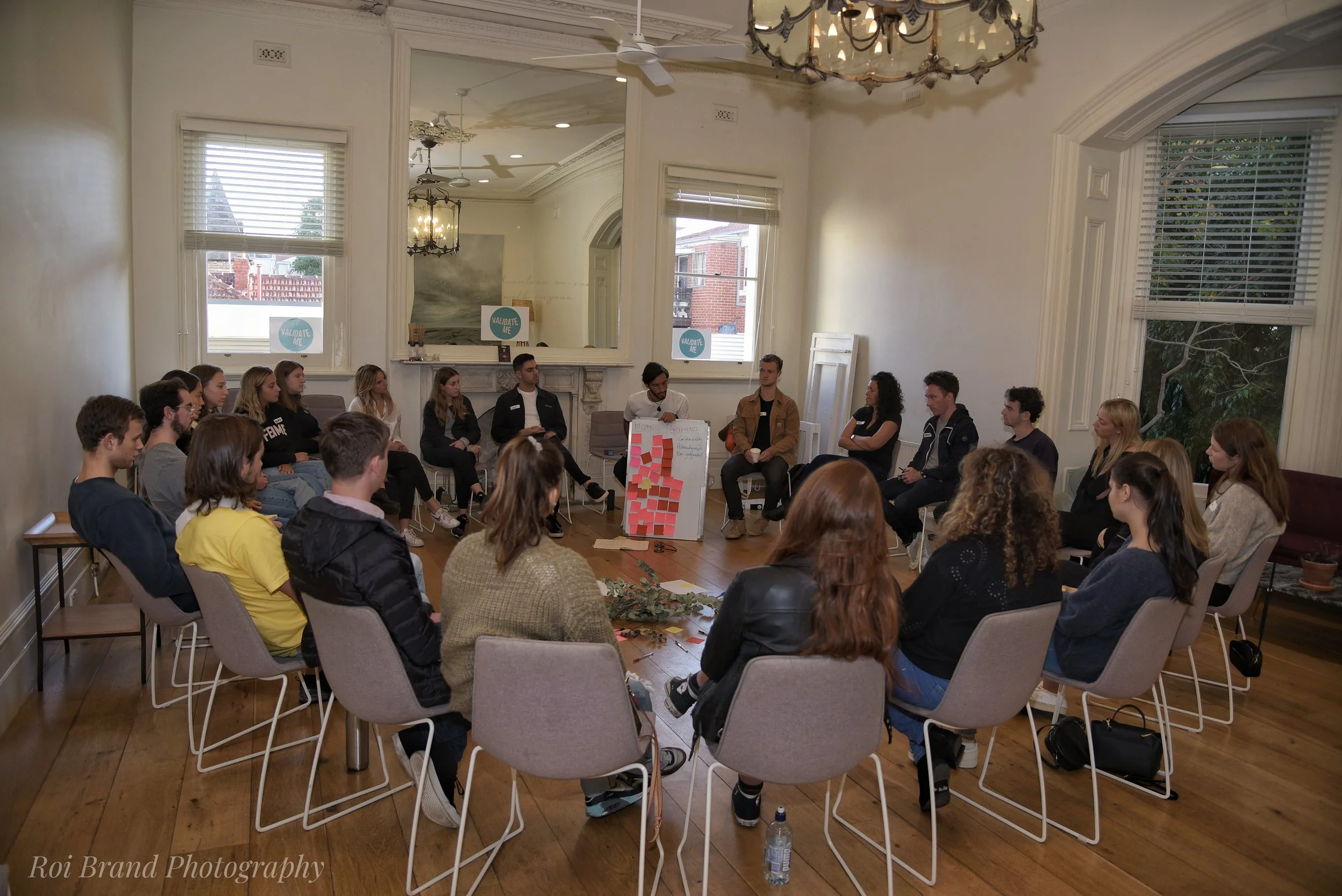
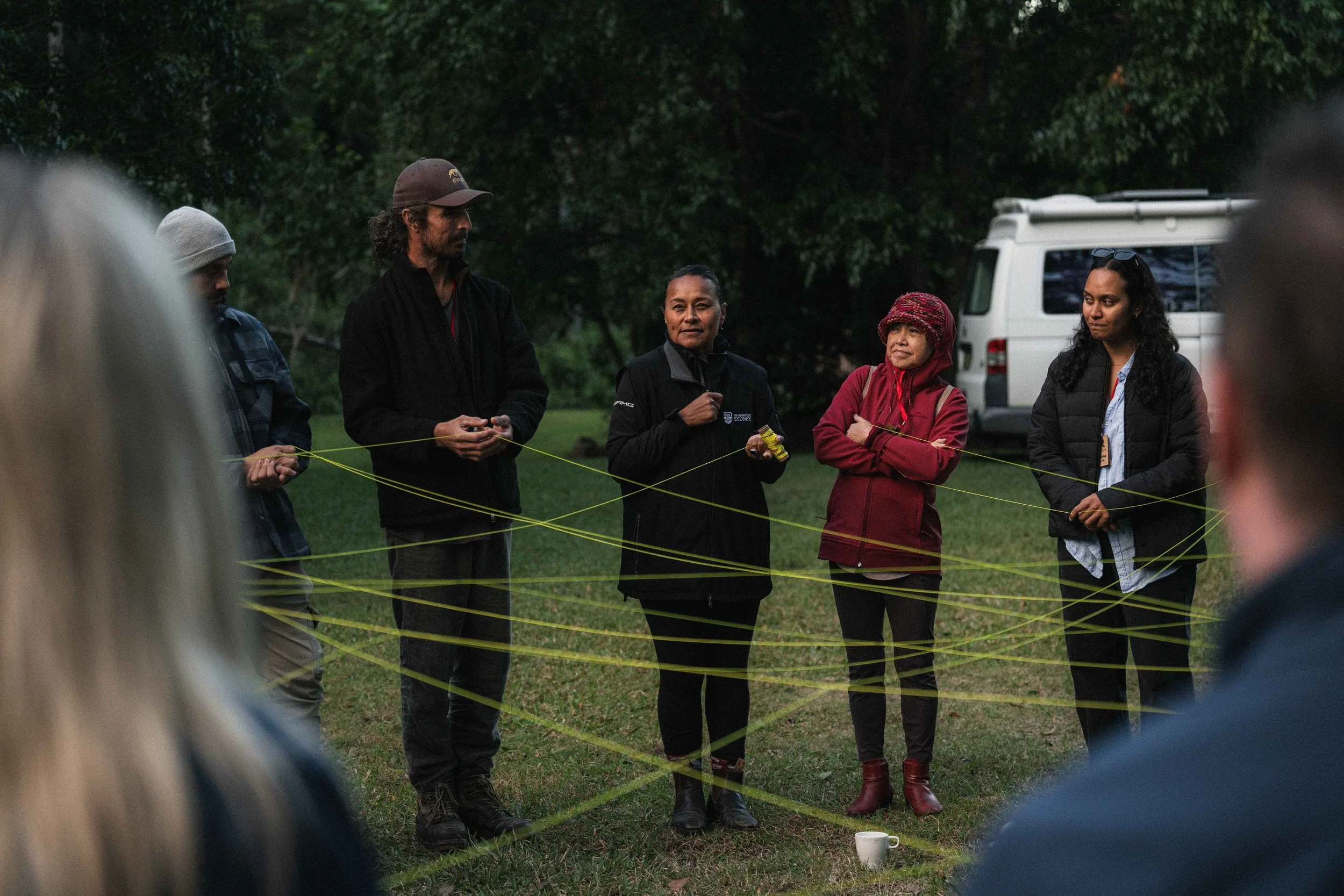
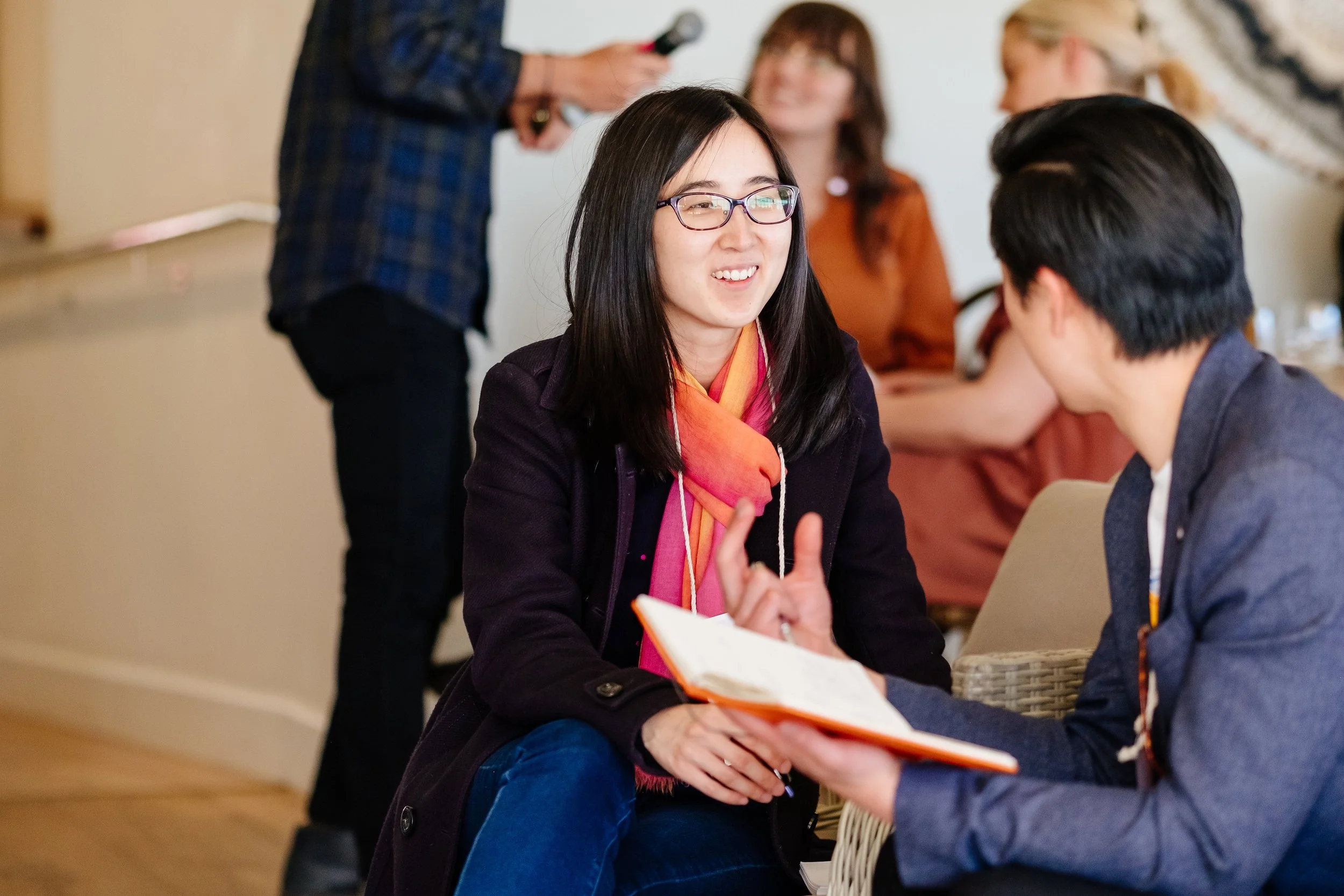
What embodied leadership development looks like in practice
Embodied leadership development works at a different level than conventional leadership training. Rather than adding new knowledge and hoping behaviour follows, it works directly with the body — with posture, breath, movement, nervous system regulation, and the somatic patterns that shape how a leader shows up under pressure.
In practice, this might include:
Somatic awareness work. Helping leaders notice their own physical patterns — where they hold tension, how their breathing changes in conflict, what happens in their body when they feel challenged or uncertain. This isn't about relaxation. It's about developing the capacity to sense one's own state accurately and in real time.
Nervous system regulation. Many leaders operate in a sustained state of sympathetic activation — the nervous system's fight-or-flight response. This is understandable given the pressures of leadership. But a leader in chronic activation is reactive rather than responsive, closed rather than curious, and subtly but powerfully signalling danger to their team. Learning to regulate — to move between activation and presence — is one of the most important things a leader can develop.
Presence and ground. "Being present" is a cliché. It's also a somatic skill. Presence — the capacity to be genuinely available to what's happening in the room — is cultivated through practice, not intention. Embodied leadership work often focuses on developing a felt sense of "ground" — a settled, rooted quality in the body that allows a leader to remain open under pressure rather than contracting.
Relational attunement. The capacity to accurately read and respond to others is not purely cognitive. It's a bodily skill — the ability to sense the emotional tone of a room, to notice when someone has gone quiet or when an unspoken tension is shaping the conversation. This capacity can be developed, but it requires working somatically.
Why this matters for organisational culture
Culture, ultimately, is what a group of people do habitually — how they meet, how they disagree, how they treat each other under pressure, whose voice counts and whose doesn't. These habits are encoded not just in norms and processes, but in bodies.
When leadership development ignores the body, it leaves the most powerful lever untouched. Leaders can leave a program with the right language and the right frameworks, and walk back into their team and reproduce the same relational patterns they always have — because those patterns live in their nervous systems, not in their knowledge.
Embodied leadership development changes this. Not because it's magic, but because it works at the level where culture actually lives.
A different question to sit with
Most leadership development asks: What do I need to know or do differently?
Embodied leadership asks something prior to that: How am I actually showing up? What does my presence communicate, independent of my intentions? And what would it take to lead from a more settled, more available, more genuinely present place?
These are harder questions. They require a different kind of support. But for leaders and organisations willing to go there, the shift in culture that follows is qualitatively different from anything a training program can produce.
Turning Ground works alongside leaders and organisations doing the slower, more honest work of cultural change — grounded in depth psychology, somatic practice, ecological thinking, and genuine human relationship. If something here has resonated, we'd love to start a conversation.