Eco-Therapy in Melbourne: Reconnecting with the Living World When Screens, Anxiety, and Climate Grief Leave You Untethered
Something has shifted in the therapy room in recent years. It is hard to put a single name to it, but it tends to arrive wearing different faces.
Sometimes it is the person who describes a constant low-level restlessness — the inability to be still, to be present, to let a moment last without reaching for a screen. Sometimes it is someone articulating, haltingly, a grief about the state of the world that they don't know how to hold: the species loss, the fires, the coral bleaching, the creeping awareness that the natural world they inherited is not the one their children will know. Sometimes it is both at once — the hyperconnected and the ecologically bereft, arriving together in the same body.
These are not unrelated. They share a root, and it is worth naming: an increasing estrangement from the living world. From the physical textures and rhythms and communities of interdependence — soil, weather, seasons, other species — that constituted the primary environment of human experience for almost the entirety of human history, and that we have exchanged, with astonishing rapidity, for glass, light, and information streams.
This post is about eco-therapy: what it is, what it addresses, and why it has become a meaningful part of an integrative psychotherapy practice for people navigating the particular existential conditions of the present moment.
The dissociative quality of our current world
At Turning Ground, we have written at some length about what we call the atrophy of the human in a technological age — the way that the tools designed to extend human capacity have also, gradually, begun to colonise the interior spaces from which that capacity flows. The capacity for attention. For silence. For the kind of slow, embodied presence that allows genuine reflection, genuine relationship, genuine encounter with beauty or difficulty.
The rise of AI has deepened this. We are now in the early stages of a cultural shift in which artificial intelligence systems — designed to be responsive, knowledgeable, perpetually available — are becoming, for many people, the primary mirrors for their inner life. The existential implications of this are only beginning to be reckoned with.
What we know from neuroscience and from the evidence of human experience is that nervous systems regulate not primarily through screen-mediated exchange, but through embodied, relational, and sensory contact: with other organisms, with varying light, with wind and soil and uneven ground, with the rhythms of growth and decay that the living world enacts around us. The research on attention restoration, on stress physiology in natural environments, on the relationship between time in nature and parasympathetic nervous system activation, consistently points in the same direction: the living world is not merely pleasant. For human nervous systems calibrated across hundreds of thousands of years of embeddedness in it, it is regulatory.
Removing that contact — or reducing it to the margins of life, a weekend activity rather than a daily reality — has consequences that are showing up, increasingly, in the therapy room.
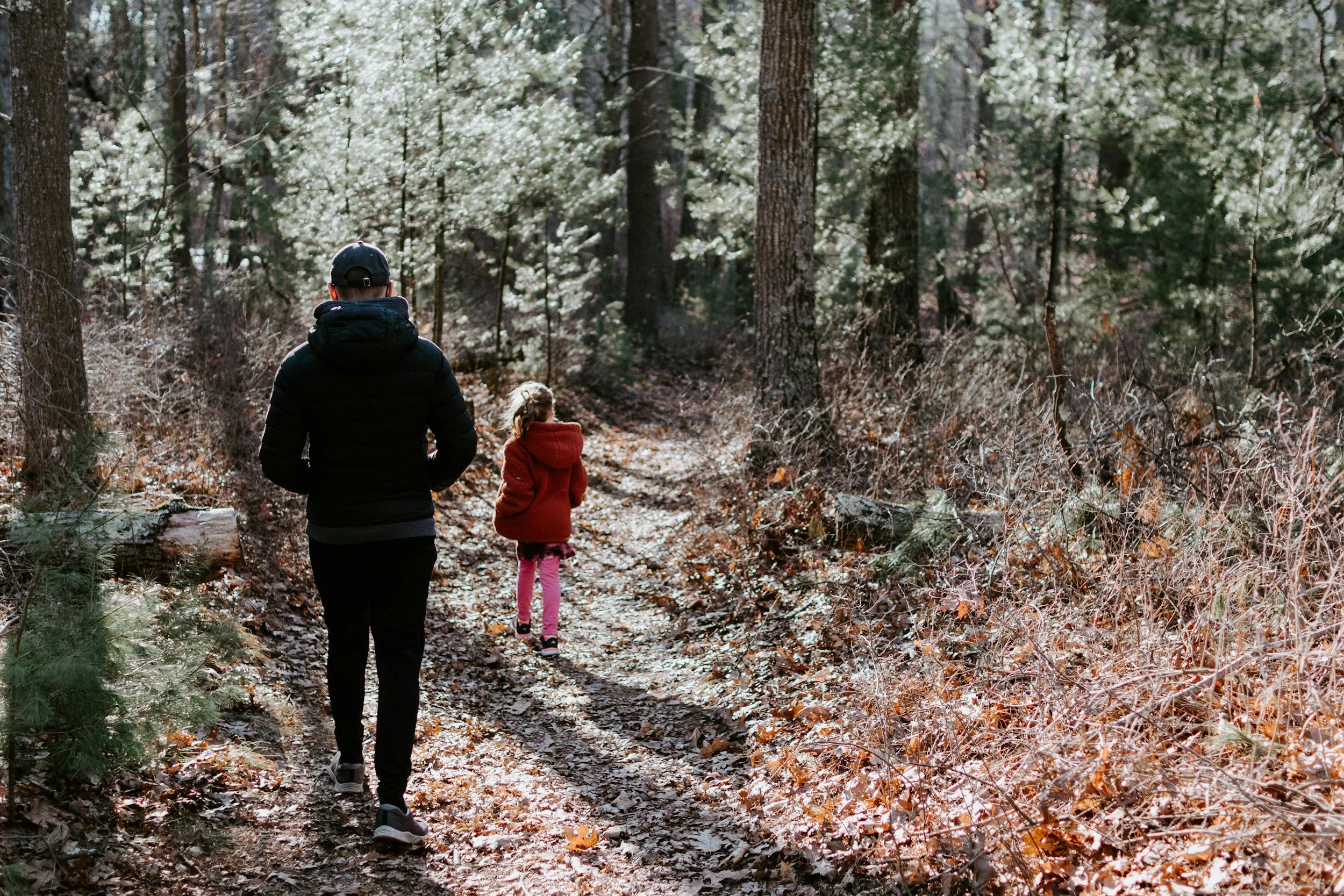
Ecological grief and eco-anxiety
Alongside the dissociation from technological saturation, there is something else: a specific form of suffering that the Australian philosopher Glenn Albrecht has named solastalgia — the grief and distress that arise from the perceived deterioration of one's home environment. Distinct from nostalgia, which is the pain of distance from a beloved place, solastalgia is the pain of remaining in place as the place changes around you.
For many Australians — those who grew up near the coast, the bush, the reef, or the agricultural landscapes now under increasing stress — this is not abstract. The 2019-2020 Black Summer fires produced documented psychological trauma in people nowhere near their flames, through the simple fact of witnessing, through smoke-hazed skies and saturated news feeds, the scale of what was burning.
Eco-anxiety is perhaps the more widely known term: the anticipatory dread that arises in response to climate projections, biodiversity loss, and the felt sense that the trajectory of the living world is beyond one's capacity to influence meaningfully. It sits in a peculiar relationship to standard clinical anxiety, because it is — in a literal sense — appropriate. The evidence does support the concern. This is not catastrophising in the CBT sense. It is an accurate perception of an accurate threat.
This creates particular challenges for conventional therapeutic approaches, which typically work by helping people identify the irrational aspects of their fear and develop more calibrated responses. When the fear is not irrational, "challenging the thought" is not only insufficient — it can feel dismissive, even gaslighting.
What eco-anxiety often needs instead is witness: acknowledgement that the grief and fear are proportionate responses to a real situation. Room to feel them rather than manage them. And — alongside that witness — support in finding a way to remain in a genuine relationship with the living world, rather than in either anxious vigilance or defensive numbness.
What eco-therapy is
Eco-therapy — sometimes called nature-based therapy, ecopsychology, or green therapy — is a broad field that encompasses a range of approaches united by the conviction that the relationship between the human psyche and the more-than-human world is therapeutically significant and cannot be ignored.
In its most literal form, eco-therapy involves moving sessions into outdoor settings — working in parks, gardens, bushland, near water — and drawing on the therapeutic dimension of being in living environments. In its more conceptual form, it involves bringing ecological awareness, embodied nature connection, and an orientation toward the person's relationship with the more-than-human world into the frame of the therapeutic conversation, wherever that conversation takes place.
At Turning Ground, our approach to eco-therapy is integrative. It draws on the academic and clinical tradition of ecopsychology — particularly the work of Theodore Roszak, Joanna Macy, and the broader "Work That Reconnects" tradition — alongside somatic and body-based approaches, contemplative practice, and contemporary depth psychology.
The work might involve:
Making space for ecological grief — giving the sorrow about what is being lost genuine room, rather than sublimating it into activism or numbing it with distraction. Grief that is genuinely felt and witnessed tends to move; grief that is suppressed tends to become anxiety, depression, or rage.
Re-establishing sensory contact with the living world — exploring the quality of attention available when the body is in genuine contact with living systems: the particular quality of attention that a tree, a waterway, or a patch of garden can receive. This is not mystical — it is, in part, neurological. Time in natural settings produces measurable shifts in stress physiology, attentional capacity, and the quality of relational presence.
Exploring the person's relationship with place and non-human others — what places have mattered? What has been lost? What remains? The ecological dimension of personal history is often rich and underexplored in conventional therapy.
Working with the body as part of the ecological field — the body is not separate from the natural world; it is a part of it. Breath, sensation, the felt quality of being a creature embedded in a living system: these are entry points into a different relationship with both self and world.
Who eco-therapy is for
Eco-therapy tends to be a particularly good fit for people who:
Are experiencing eco-anxiety, climate grief, or solastalgia, and want a therapist who can hold these as real and appropriate responses rather than cognitive distortions
Feel the dissociative effects of heavy screen use and digital saturation, and are seeking support in reclaiming a more embodied, grounded quality of presence
Work in environmental or ecological fields and carry the particular weight that comes from professional proximity to what is being lost
Have a strong relationship with the natural world and want that relationship acknowledged as part of their psychological life, not bracketed as a hobby
Are drawn to contemplative and somatic approaches and feel a natural alignment with the idea that the more-than-human world has something to offer the healing process
In-person in Thornbury and via telehealth
Many of our therapists have studied eco-therapy (applied eco-psychology) and include these perspectives, and, where appropriate, practices, in individual sessions. Telehealth is available for those further afield.
If this speaks to something you've been carrying — the grief, the restlessness, the longing for ground — a Discovery Call is a gentle place to begin.