Why Psychological Safety Can't Be Trained — And What To Do Instead
There's a reason psychological safety has become one of the most-searched terms in leadership and organisational development over the last few years. Leaders and HR teams can feel when it's missing — the meetings where people don't speak up, the feedback that never quite arrives, the talented team member who goes quiet and then hands in their resignation.
Google's landmark Project Aristotle research identified psychological safety as the single most important factor in high-performing teams. Since then, it's made its way onto every P&C priority list, every leadership off-site agenda, and into no small number of half-day workshops.
And yet, for most organisations, it isn't improving.
This post explores why — and what a deeper, more effective approach to psychological safety actually looks like.
What most psychological safety training gets wrong
The standard response to a psychological safety deficit is a training intervention. A workshop on "speaking up." A framework for giving feedback. A set of communication norms posted on the wall.
These aren't useless. But they're working at the wrong level.
Psychological safety isn't a skill people lack. It's a relational condition that either exists in a team's culture or it doesn't. You can teach someone the language of constructive feedback and they can still feel — at a gut level — that it isn't safe to use it. The body knows things the mind is slow to admit.
What this means practically is that training people in the behaviours of psychological safety, without addressing the conditions that make those behaviours possible, produces compliance at best. People learn to perform the right moves without the trust that makes those moves meaningful.
Psychological safety is an embodied experience
One of the most important and underappreciated dimensions of psychological safety is that it's felt, not thought.
When a team member decides whether to speak up in a meeting, they're not running a conscious cost-benefit analysis. They're reading the room — the energy of their manager, the pace of the conversation, the subtle signals that tell them whether this is a space that can hold what they have to say.
This is nervous system logic, not rational logic. And it means that creating genuine psychological safety requires attending to what's actually happening in a team's relational field — not just what people say they value, but what their bodies communicate moment to moment.
A leader who espouses psychological safety but who regularly interrupts, who becomes visibly uncomfortable with challenge, or who moves too quickly past discomfort — that leader's nervous system is shaping the culture far more powerfully than any value statement or workshop ever will.

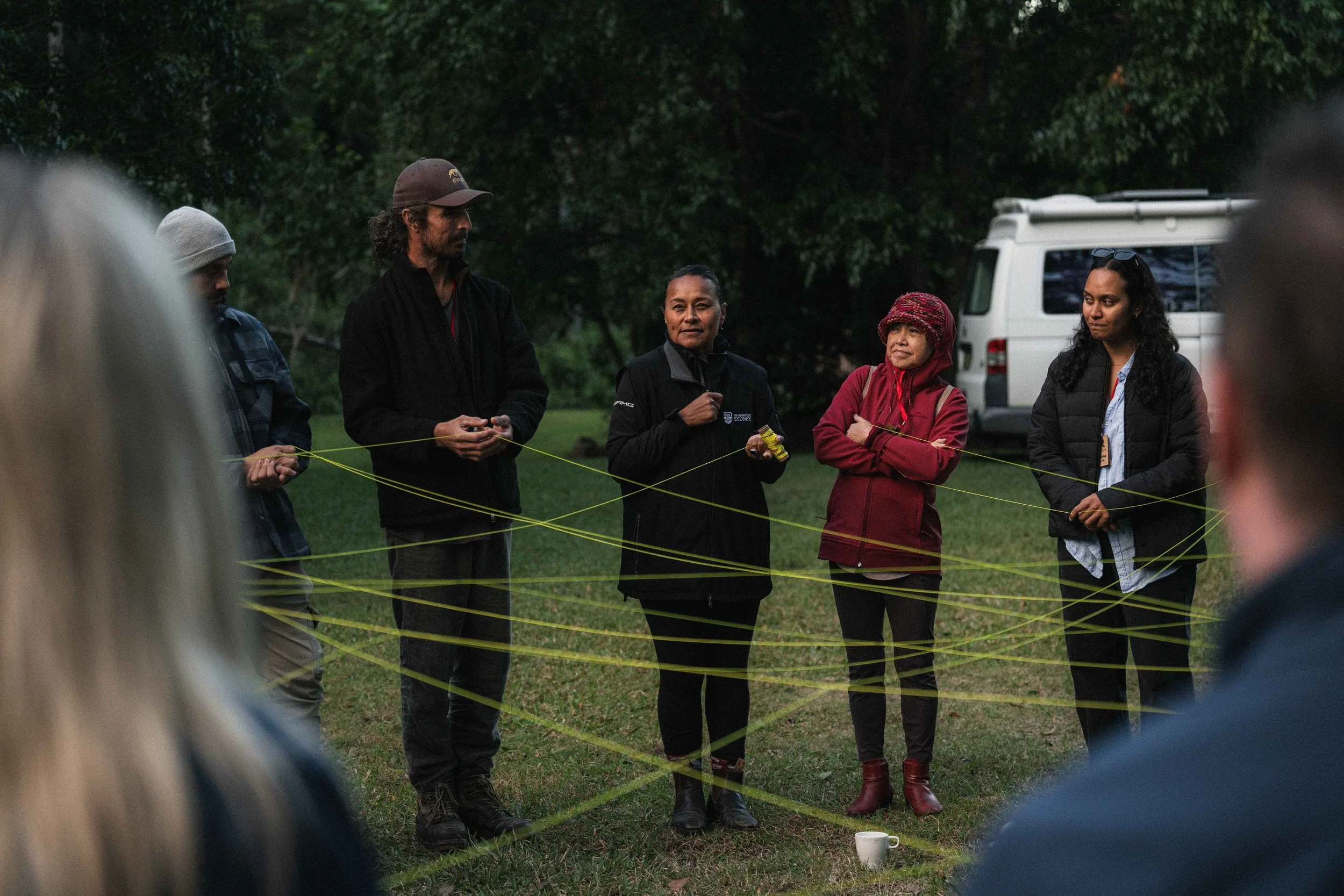

The relational conditions that actually create psychological safety
Research and practice consistently point to the same underlying conditions:
Real trust between people. Not the procedural kind — the kind that accumulates through being known, through seeing how someone behaves under pressure, through the experience of having brought something difficult and having it received with care.
Leaders who can tolerate not-knowing. Psychological safety collapses when leaders signal — consciously or not — that uncertainty is a problem to be managed rather than a condition to be worked with honestly. Teams read their leaders carefully. If the leader needs to have the answer, the team learns not to bring the questions.
Honest, unhurried dialogue. Most organisational culture problems are sustained by conversations that never quite happen — the debrief that stays surface-level, the team conflict that gets managed rather than addressed, the dissent that circulates after the meeting rather than in it. Creating psychological safety means creating the conditions for those conversations to actually occur.
A shared understanding of what the work requires. When people are clear about purpose — not just what they're doing but why it matters — it becomes easier to take the relational risks that good collaboration requires. Meaning reduces the stakes of vulnerability.
What this means for how you develop your team
If psychological safety can't be trained, it can be tended. That's a different orientation entirely — and a more honest one.
Tending psychological safety means:
Attending to the quality of relationship in your team, not just the quality of output
Creating regular spaces for genuine reflection and dialogue — not just updates and decisions
Helping leaders understand and regulate their own nervous systems, so their reactivity isn't setting the emotional tone of the room
Looking at the patterns in who speaks, who goes quiet, and what stays unsaid — and being curious about what those patterns are protecting
Working with conflict directly rather than routing around it
None of this is a one-day workshop. It's an ongoing practice, embedded in how the team meets, how leadership shows up, and what the organisation genuinely values — not just what it says it values.
The question worth sitting with
If you're a leader or a People & Culture practitioner reading this, the question isn't "do we have psychological safety?" It's more uncomfortable than that.
It's: What is it actually like to bring something difficult to this team? What happens to a person — in their body, in their relationships — when they speak up here?
That's the real measure. And the answer, honestly faced, usually points toward the work that needs to happen.
Turning Ground works alongside leaders and organisations doing the slower, more honest work of cultural change — grounded in depth psychology, somatic practice, ecological thinking, and genuine human relationship. If something here has resonated, we'd love to start a conversation.