

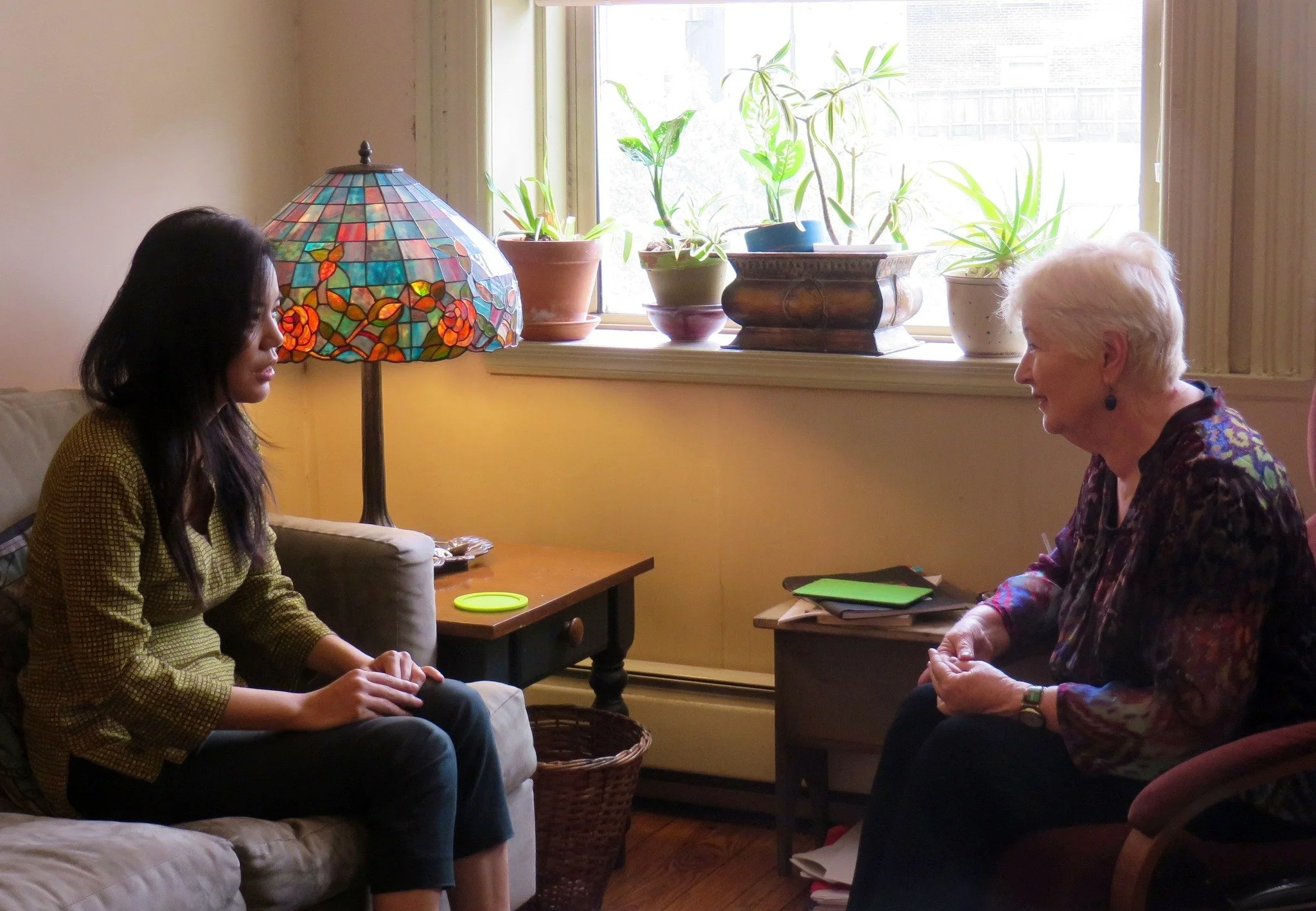
Relational Psychodynamic Therapy: What It Is, How It Works, and Who Benefits Most
Relational psychodynamic therapy is neither the Freudian stereotype nor a simple talking cure. It's a rigorous, evidence-informed practice built on the idea that the relationship itself is the mechanism of change. Here's what it is, what actually happens in sessions, and who tends to find it most useful.

Eco-Therapy in Melbourne: Reconnecting with the Living World When Screens, Anxiety, and Climate Grief Leave You Untethered
A growing number of people are arriving in therapy carrying two intertwined forms of distress: the disorientation of living increasingly inside digital and AI-saturated environments, and a sorrow about the state of the natural world they can't quite name. Eco-therapy meets both. Here's what it is and who it serves.

Psychedelic Integration Therapy in Melbourne: What It Is and Why the Experience Itself Is Only the Beginning
More people are having profound psychedelic experiences — through legal ceremony, therapeutic contexts, or personal exploration — and many find the real challenge begins afterwards. Here's what psychedelic integration therapy is, how it works, and who it's for.

Inner Work, Outer Change: Why the Most Effective Systems Changers Are Learning to Go Inward
The outer complexity that social changemakers navigate every day has an inner equivalent — and the capacity to hold one depends, more than most of us are trained to admit, on the capacity to hold the other. Here's what inner work actually means for people committed to changing systems.
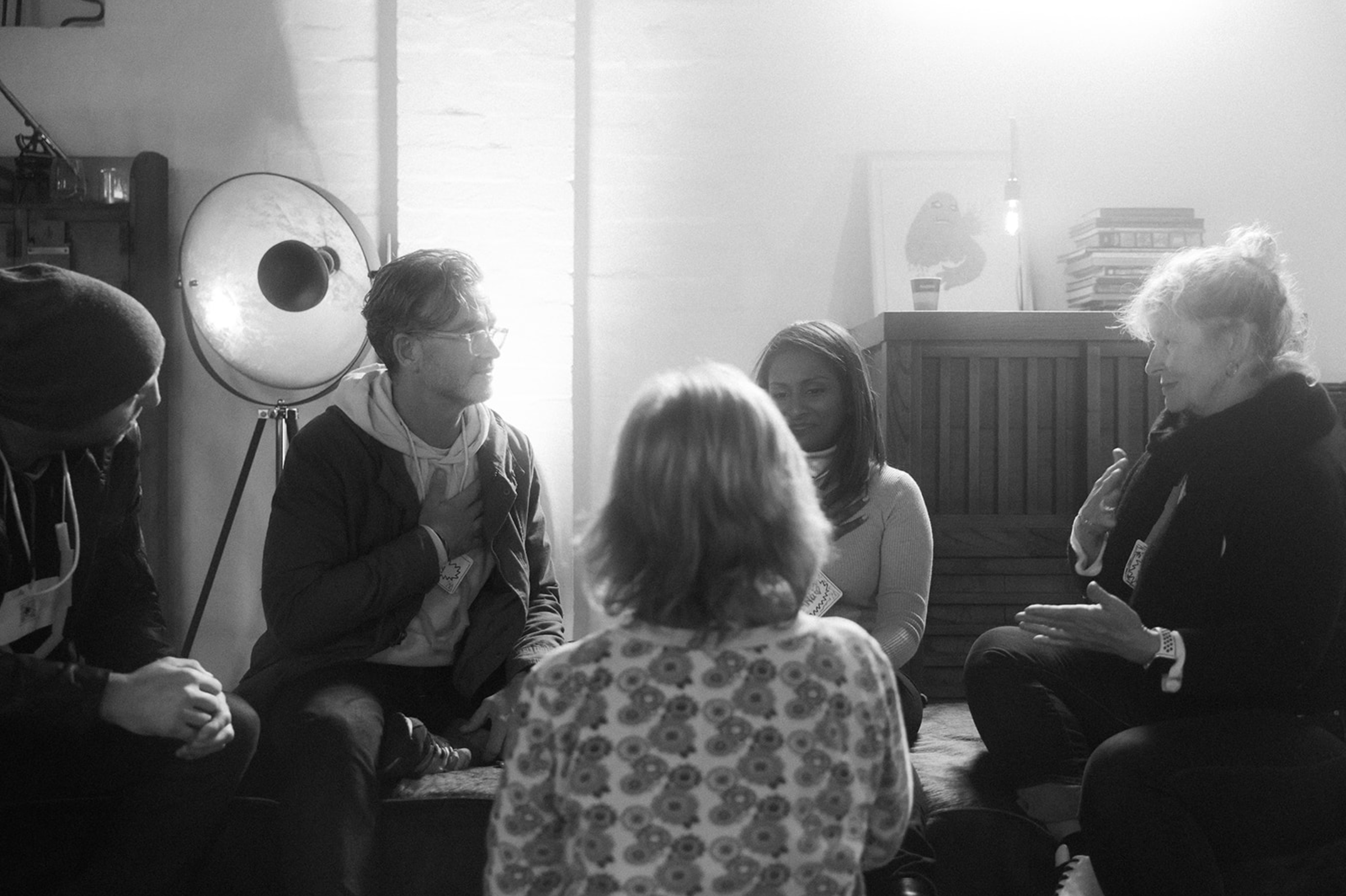
The Hidden Cost of Doing Good: What Burnout Really Looks Like for Social Changemakers
Burnout in the impact sector has a particular texture that conventional wellbeing support rarely names — let alone addresses. If you're a changemaker, community leader, or social sector worker who has tried the usual tools and still feels depleted, this is for you.

When You've Grown Apart: Understanding Relationship Drift and What Couples Therapy Can Do
You're not fighting all the time. Nothing dramatic has happened. But somewhere along the way, you and your partner began feeling more like housemates than partners. This is relationship drift — and it's more common, and more treatable, than most people realise.
LGBTQIA+ Affirming Therapy in Melbourne: What to Look For and Why It Matters
Finding a therapist who genuinely understands LGBTQIA+ experiences — not just a therapist who says they're affirming — can make all the difference. Here's what LGBTQIA+ affirming therapy actually means in practice, and what to look for.
Trauma Therapy in Melbourne: What a Body-Informed, Relational Approach Looks Like
Trauma doesn't just live in memories — it lives in the body, in patterns of relating, and in the nervous system's habitual responses to the world. Here's how an integrative, body-informed approach to trauma therapy works, and what to look for in a trauma therapist.
Grief and Loss: Why Some Wounds Need More Than Time — and What Therapy Can Offer
"Time heals" — but sometimes it doesn't. Grief is not a problem to be solved or a process to be accelerated. Here's what therapy can offer when loss has become something you need to move through rather than wait out.
Anxiety Therapy in Melbourne: Why Talk Isn't Always Enough — An Embodied Approach
Anxiety isn't just a thought problem — it lives in the body, in the nervous system, and in our patterns of relating. Here's why an embodied, relational approach to anxiety therapy can reach places that cognitive techniques alone often can't.
Finding a Therapist in Thornbury and Northside Melbourne: A Genuine Guide
Looking for a therapist in Melbourne's inner north and not sure where to start? Here's an honest, practical guide — covering the difference between psychology and psychotherapy, how to find the right fit, and what to ask before you book.
Couples Therapy in Melbourne's Inner North: What to Expect and How to Find the Right Fit
Thinking about couples therapy but not sure where to start? Here's an honest guide to what couples counselling looks like at Turning Ground in Thornbury — from the first session to finding a therapist who's right for both of you.
What are the Inner Development Goals (IDGs)?
The Inner Development Goals (IDGs) represent a transformative approach to personal and societal growth, emphasizing the critical role of inner development in achieving sustainable global progress.

Understanding Shame: Insights and Treatment Approaches
Shame is a deeply painful emotion that arises from the belief that one is fundamentally flawed or unworthy. Unlike guilt, which is related to specific behaviors, shame is more about the self and can have a pervasive impact on an individual’s mental health and well-being. Understanding shame and how to address it is crucial for fostering healthier emotional lives.
What is Interpersonal Group Therapy?
Our mental health is intricately linked to our interpersonal experiences, and group therapy offers a collaborative environment for individuals to explore their behaviors, thoughts, and feelings in relation to others. Explore the purpose and practice of group therapy here, to see if you might like to explore joining a program.

Psychotherapy and Soul
The word “Psychotherapy” is derived from the two Greek words: "psyche or psūkhḗ," meaning soul, and “therapeia” meaning “serve” or “attend to”. Psychotherapy therefore literally means; “to serve, or attend to, the soul”.
Exploring and Understanding: Anxiety
Anxiety, a universal human experience for most of us at various points in our lives, is an intricate and multifaceted experience which involves the interplay of thoughts, emotions, and bodily sensations.
In this piece, we will explore and attempt to understand anxiety - the types of anxiety which we may experience, the potential causes and origins, and pathways to responding and overcoming anxiety.

Exploring and Understanding: Depression
‘Depression’ has a long history, and has come to be used as a colloquial term in everyday life - a sense of feeling ‘down’, ‘saddened’ or overall ‘melancholic’ about some particular event, circumstance, or chapter in life. The symptoms of depression may help us understand what is meant by this encompassing term - sadness, fear, anxiety, despair, an overall sense of helplessness and overwhelm.
In this short piece, we will look to explore how depression may be understood from a developmental frame, whilst briefly outlining some strategies for managing and overcoming depression.

What is Integrative Psychotherapy?
Integrative Psychotherapy is a form of psychotherapy That embraces a multi-disciplinary, holistic, tailored approach that specifically caters to the needs of the individual. At its core, integrative psychotherapy begins with the subjective inquiry into one’s own lived world as the basis of understanding how to begin addressing the concerns one is facing.

What connects philosophy, psychotherapy, and culture?
Philosophy has traditionally played a key role in shaping our understanding of human nature, the world around us, and our place in it. It provides a framework for asking fundamental questions about life, such as the nature of existence, truth, morality, and the meaning of life. These questions are also at the heart of psychotherapy, which seeks to help individuals better understand themselves and their relationships with others.